Microlearning: Powerful Short Learning Methods for Busy People
Discover what microlearning is and how short, focused lessons like videos, quizzes, and flashcards boost retention, engagement, and flexible learning anytime, anywhere.


What is Microlearning
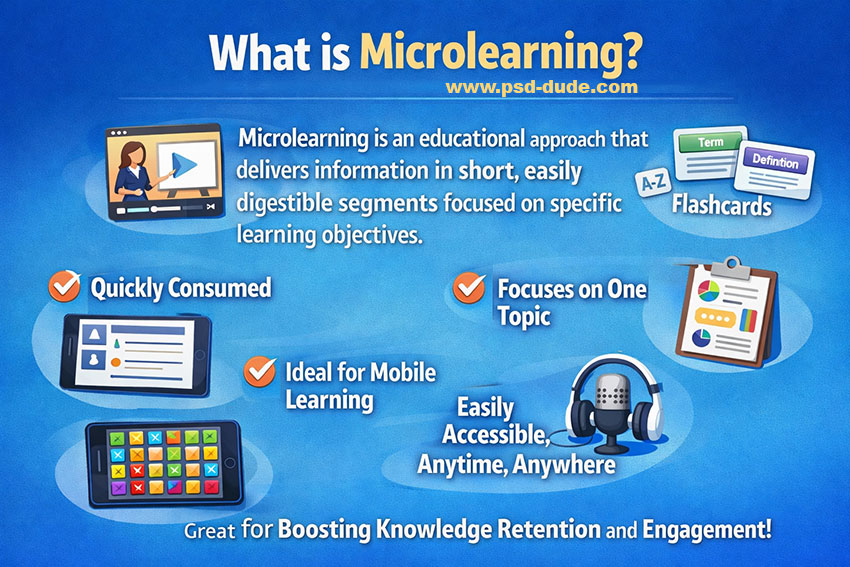
Microlearning is a learning approach that delivers information in small, focused units that are easy to consume in a short amount of time. It is especially effective in digital environments, where learners can quickly access lessons through apps, videos, quizzes, or short articles during their daily routines.
For readers interested in exploring real tools that use these microlearning formats, several mobile platforms already implement them successfully. In this guide you will find the best microlearning apps, like Headway apps and many modern learning tools that have features like gamified quizzes, short lessons, and personalized learning paths designed for busy users.
Effective microlearning uses 2-10 minute, focused, and mobile-friendly modules to boost retention. Key microlearning tips include focusing on one learning objective per session, using interactive elements like quizzes, and employing spaced repetition for long-term memory. It should be instantly actionable, using multimedia to simplify complex topics.
Prioritizing Learning: The Eisenhower Matrix
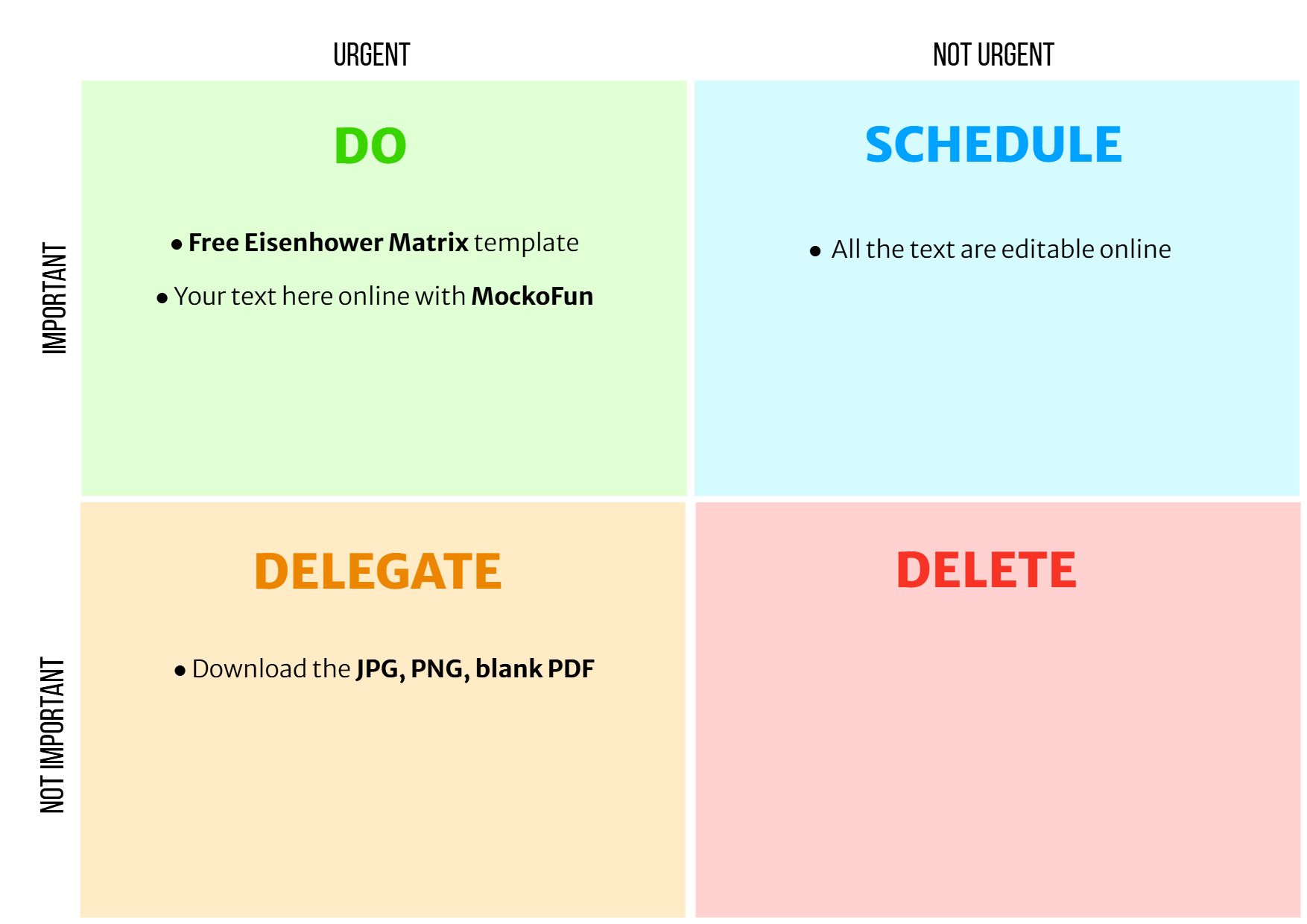
Before starting a microlearning routine, it is useful to prioritize what to learn. Using an Eisenhower Matrix template helps learners organize tasks based on urgency and importance. It is important for effective learning to focus on the most valuable topics instead of spending time on less relevant information.
Choosing the Right Microlearning Types
Once learning priorities are clear, learners can select the most effective microlearning formats. Options such as short video lessons, interactive quizzes, flashcards, and mini articles help present information in quick and engaging ways that support better retention.
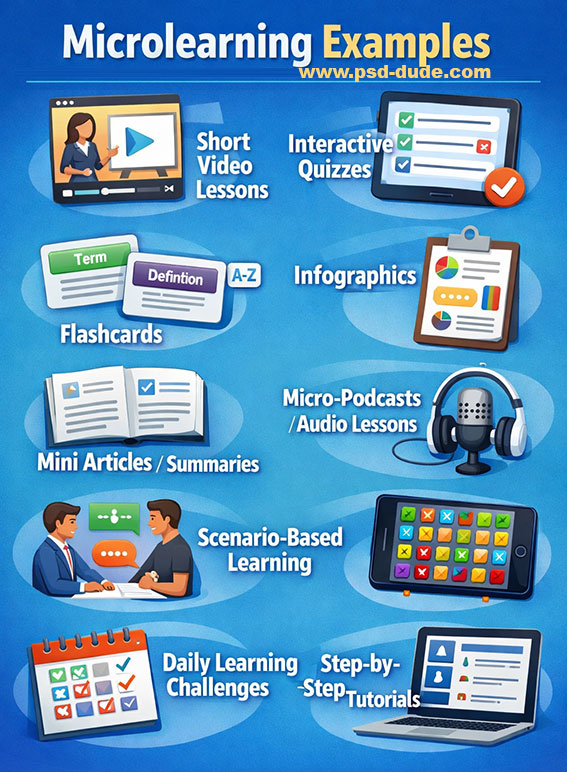
Here is a list with the most important types of microlearning based on efficiency. Some microlearning types like flashcards can exist both digitally (in apps or online) and physically. However, most modern microlearning is digital, especially in apps.
1. Short Video Lessons
Short video lessons are typically 2–5 minute videos delivered through learning apps. They present focused information in a quick and engaging format, making it easier for learners to understand and retain key concepts.
2. Interactive Quizzes
Interactive quizzes are commonly found in apps or websites and allow learners to test their knowledge immediately after learning new material. They provide instant feedback and help reinforce understanding.
3. Flashcards
Digital flashcard apps present small pieces of information that learners can review repeatedly. They are especially useful for memorizing definitions, vocabulary, formulas, or key facts.
4. Infographics
Infographics are visual learning materials displayed as images in apps or websites. They summarize complex information into clear visuals, making concepts easier to understand at a glance.
5. Mini Articles / Summaries
Mini articles are short written explanations available in learning apps. They focus on a single concept or topic, providing quick and concise information for fast learning.
6. Micro-Podcasts / Audio Lessons
Micro-podcasts or short audio lessons deliver learning content through brief recordings within apps. They allow learners to absorb information while multitasking, such as during commuting or exercising.
7. Scenario-Based Learning
Scenario-based learning uses interactive choices within apps to simulate real-life situations. Learners make decisions and see the outcomes, helping them apply knowledge in practical contexts.
8. Interactive Games
Educational mobile games turn learning into an engaging activity. By completing challenges or solving problems, learners develop skills while staying motivated through game mechanics.
9. Daily Learning Challenges
Daily learning challenges are small tasks or questions delivered through app notifications. They encourage consistent practice and help learners build knowledge through regular engagement.
10. Step-by-Step Tutorials
Step-by-step tutorials guide learners through a process using structured instructions in apps or videos. This microlearning format helps users quickly learn practical skills by following clear, simple steps.
Microlearning Benefits
Microlearning has many benefits for learners. Microlearning in education is really important and many teachers use microlearning in the classroom for guiding students to learn quickly. Below you have a list with the main advantages for introducing microlearning in your daily learning routine.
- Easy to understand because information is presented in small pieces
- Improves memory and knowledge retention
- Fits into busy schedules with short learning sessions
- Keeps learners engaged with videos, quizzes, and games
- Allows learning anytime and anywhere using digital devices
Using Apps and Tools for Microlearning
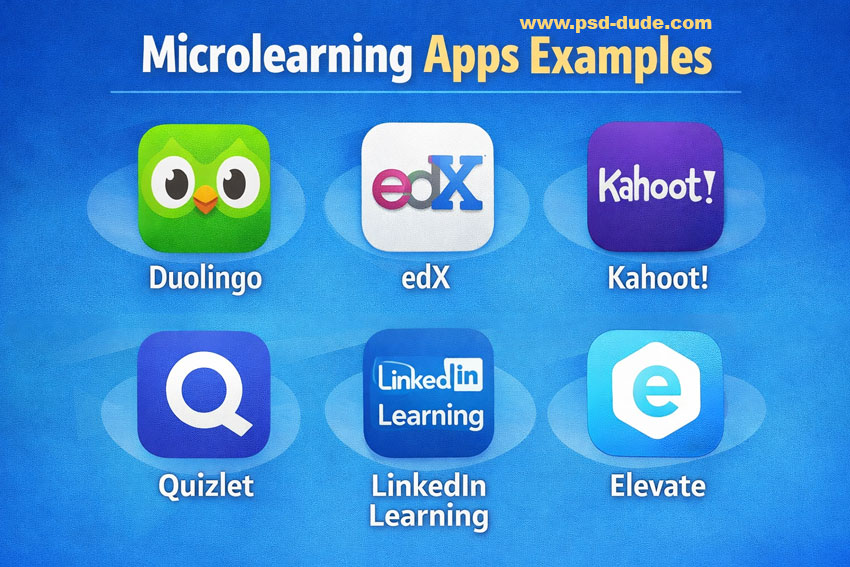
Many modern learning apps support microlearning by offering short lessons, daily challenges, and interactive activities. These tools allow learners to access knowledge anytime and anywhere, making it easier to build consistent learning habits.
Popular platforms such as Headway, Duolingo, Elevate, Nibble and Brilliant break complex topics into quick activities that can often be completed in just a few minutes, making learning easier to fit into daily routines. Here is a list with some of the best study apps for students that you can try for free.
AI Microlearning
AI microlearning uses artificial intelligence to make learning more personalized and efficient. AI can recommend short lessons based on a learner’s progress, interests, and performance. This helps learners focus on the topics they need most and learn at their own pace through quick and targeted learning activities.
In Conclusion
Microlearning topics focus on delivering specific, action-based information in short, digestible bursts (typically 2-5 minutes) to improve knowledge retention and on-the-job performance. Common formats include short videos, infographics, quizzes, and flashcards, which are ideal for just-in-time training!
Generative Fill
80s font
No comment(s) for "Microlearning"