Cloud Consulting
Rising cloud bills, security issues, or slow apps? Learn when to hire a cloud consultant to cut infrastructure costs, secure your data, and scale your business without the headaches.


Cloud consulting has been around for well over a decade, but it has become increasingly important as more organizations move their systems to the cloud.
Businesses in the mid-market can certainly implement enterprise-class technologies at a more affordable scale, offering the scale and flexibility they need and cutting upfront technology costs. Many organisations start with a do-it-yourself (DIY) approach with their internal IT teams handling deployment, security and optimisation.
It’s imperative to determine when your company is growing and needs to hire a cloud consultant. The assistance of cloud-managed IT services at the right moment can aid in keeping costs low, improving efficiency, enhancing security, and ensuring that your cloud architecture will meet your business objectives in the future.
What Is Cloud Consulting?
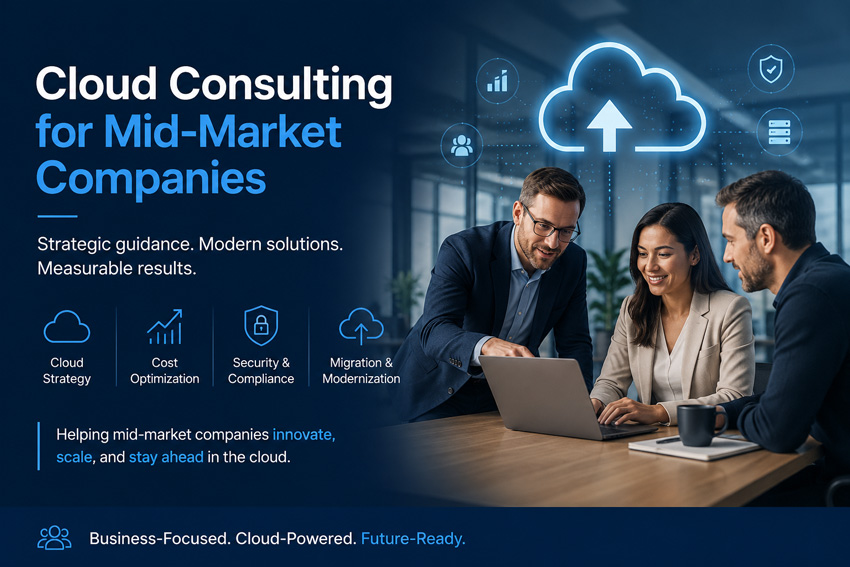
Cloud consulting is a professional service that helps businesses successfully plan, implement, secure, optimize, and manage cloud environments that support their long-term goals. Cloud consultants help organizations plan cloud strategies, migrate applications and data, improve security, optimize costs, and ensure cloud infrastructure aligns with business objectives.
In simple terms:
- Cloud means using computing power, storage, and software over the internet instead of running everything on your own servers.
- Consulting means receiving expert advice and guidance to solve business or technical challenges.
Cloud consultants typically help businesses:
- Move applications and data to the cloud.
- Select the right cloud provider.
- Improve cloud security.
- Reduce cloud costs.
- Increase performance and reliability.
Examples:
Imagine a company stores all its files on old office computers. A cloud consultant helps them move everything to services such as Amazon Web Services (AWS), Microsoft Azure, or Google Cloud, allowing employees to securely access data from anywhere.
For my website, PSDDude, I use a hybrid approach that combines traditional hosting with modern cloud services. While the core ASP.NET application and a database are hosted on a traditional web server, I utilize Cloudflare's cloud network at the edge to handle DNS, caching, and security. This setup demonstrates how even standard web applications can benefit from cloud integration—improving loading speeds and security without requiring a full migration of the database. For businesses looking to optimize this balance, cloud consultants can help determine which assets should remain on local servers and which should be offloaded to global cloud delivery networks.
Why More Businesses Are Investing in Cloud Consulting
Cloud consulting is an established industry, but demand continues to grow as organizations adopt newer technologies and more complex cloud environments.
Businesses increasingly need help with:
- Artificial intelligence (AI) services in the cloud.
- Cybersecurity improvements.
- Cloud cost optimization.
- Modernizing legacy applications.
- Managing multi-cloud and hybrid cloud environments.
Cloud consulting continues to evolve as cloud technology becomes more advanced and business requirements become more complex.
Who Benefits Most from Cloud Consulting?
Cloud consultants primarily work with growing mid-market companies, although they also support startups, small businesses, and large enterprises with specialized cloud projects.
Mid-market companies often rely heavily on technology but may not have dedicated cloud specialists in-house, making external expertise valuable.
Industries that commonly benefit include:
- E-commerce businesses.
- Software-as-a-Service (SaaS) companies.
- Healthcare organizations.
- Financial services and fintech companies.
- Manufacturing businesses.
- Retail chains.
- Marketing and creative agencies.
- Architecture and engineering firms.
- Education technology (EdTech) companies.
- Logistics and transportation businesses.
Example: Cloud Consulting for Graphic Design Platforms
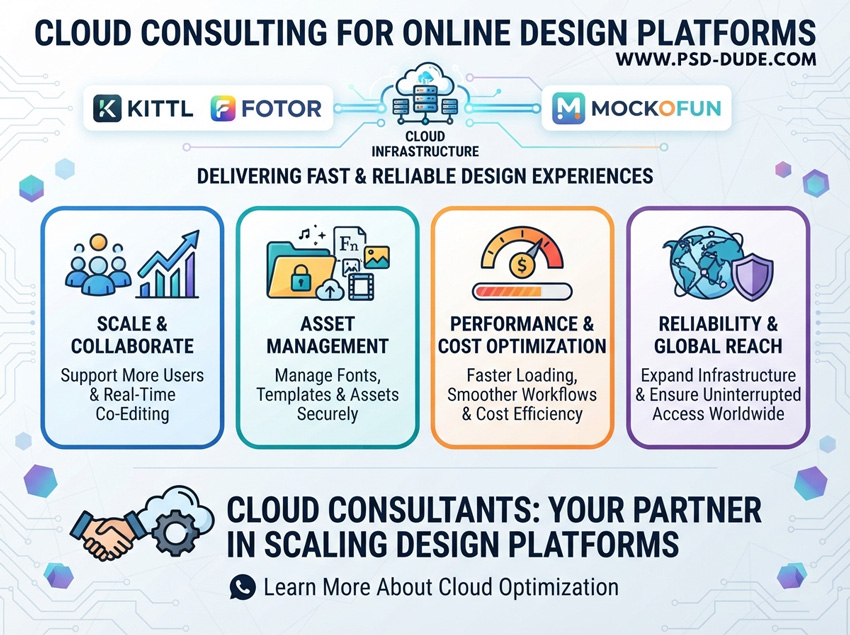
As online graphic design platforms such as Kittl, Fotor, and MockoFun continue to grow, they depend on cloud infrastructure to deliver fast, reliable design experiences. Cloud consultants help these platforms scale efficiently, improve performance, and ensure users can create, edit, and share designs without interruptions.
- Scale online design editors to support more users and real-time collaboration.
- Manage templates, fonts, images, and other design assets securely and efficiently.
- Optimize cloud performance and costs for faster loading and smoother workflows.
- Improve reliability and expand infrastructure to deliver a consistent experience worldwide.
Any growing company that depends on cloud technology but lacks deep in-house cloud expertise can benefit from cloud consulting.
When Should a Mid-Market Company Hire a Cloud Consultant?
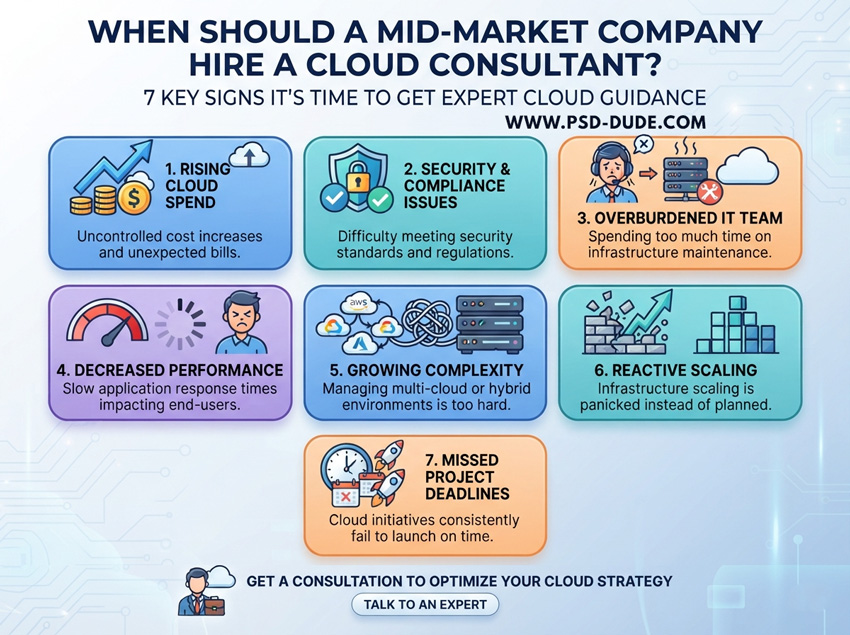
As businesses grow, cloud environments become more difficult to manage. Rising costs, security concerns, performance issues, and delayed projects are common indicators that professional cloud consulting may be needed.
1. Your Cloud Costs Keep Increasing
One of the earliest warning signs is a growing cloud bill without a clear explanation.
Common causes include:
- Oversized virtual machines.
- Unused storage.
- Idle workloads.
- Poor resource management.
- Lack of cost monitoring.
Without visibility into cloud spending, organizations often continue paying for resources they no longer use.
2. Security and Compliance Are Becoming More Difficult
As organizations manage more sensitive customer and business data, security responsibilities become increasingly complex.
Common challenges include:
- Data protection.
- Encryption.
- Regulatory compliance.
- Security monitoring.
- Vulnerability management.
- Disaster recovery planning.
A cloud consultant can strengthen cloud governance and reduce security risks.
3. Your IT Team Spends Too Much Time Maintaining Cloud Infrastructure
Internal IT teams should be able to focus on strategic projects instead of spending most of their time on maintenance.
Routine tasks often include:
- Software updates.
- Backup management.
- Server monitoring.
- Resolving outages.
- Cloud configuration.
- Performance troubleshooting.
When maintenance consumes most IT resources, innovation slows down.
4. Cloud Performance Is Affecting Users
Slow applications, downtime, and inconsistent user experiences often indicate that cloud infrastructure requires optimization.
Performance issues may result from:
- Uneven workload distribution.
- Database bottlenecks.
- Network limitations.
- Insufficient resources.
- Limited monitoring.
A cloud consultant identifies the root causes rather than simply increasing infrastructure capacity.
5. Your Multi-Cloud or Hybrid Cloud Environment Is Becoming Too Complex
Many growing businesses use multiple cloud providers or combine cloud services with on-premises infrastructure.
This often creates challenges such as:
- Managing multiple vendors.
- Maintaining consistent security policies.
- Integrating applications.
- Monitoring systems across environments.
Cloud consultants simplify architecture while ensuring the environment supports future growth.
6. Infrastructure Scaling Is Reactive Instead of Planned
Cloud infrastructure should scale before problems occur rather than after performance issues appear.
Common warning signs include:
- Emergency infrastructure upgrades.
- Frequent slowdowns.
- Last-minute capacity purchases.
- Delayed deployments.
- Performance problems during peak demand.
Cloud consultants help organizations create proactive scaling strategies.
7. Cloud Projects Keep Missing Deadlines
Projects that exceed budgets or fail to deliver expected results often suffer from planning and architectural issues.
Common causes include:
- Unclear business requirements.
- Poor project planning.
- Weak communication.
- Limited cloud expertise.
- Insufficient technical design.
Cloud consultants bring proven processes, technical expertise, and best practices that reduce project risk.
Cloud Consultant vs. Managed Service Provider vs. Hiring Internal IT Staff
The best option depends on your business objectives.
A cloud consultant is the right choice when you need:
- Cloud strategy.
- Architecture planning.
- Migration support.
- Cost optimization.
- Security assessments.
- Long-term cloud planning.
A managed service provider (MSP) is better suited for ongoing operational support such as:
- Infrastructure monitoring.
- Maintenance.
- Incident response.
- Daily cloud operations.
Hiring additional internal IT staff may be appropriate when long-term, dedicated technical resources are required.
Final Thoughts
Cloud environments often remain manageable while businesses are small, but complexity increases significantly as organizations grow.
Rising cloud costs, security concerns, performance problems, and delayed cloud projects are all strong indicators that expert guidance may be needed.
Hiring a cloud consultant is not simply about solving technical issues. It helps businesses build a cloud environment that is secure, efficient, scalable, and prepared for future growth.
Jersey Pattern
Photoshop Alternatives Online
No comment(s) for "Cloud Consulting"